


07 Apr 2026

Excel isn't the problem.
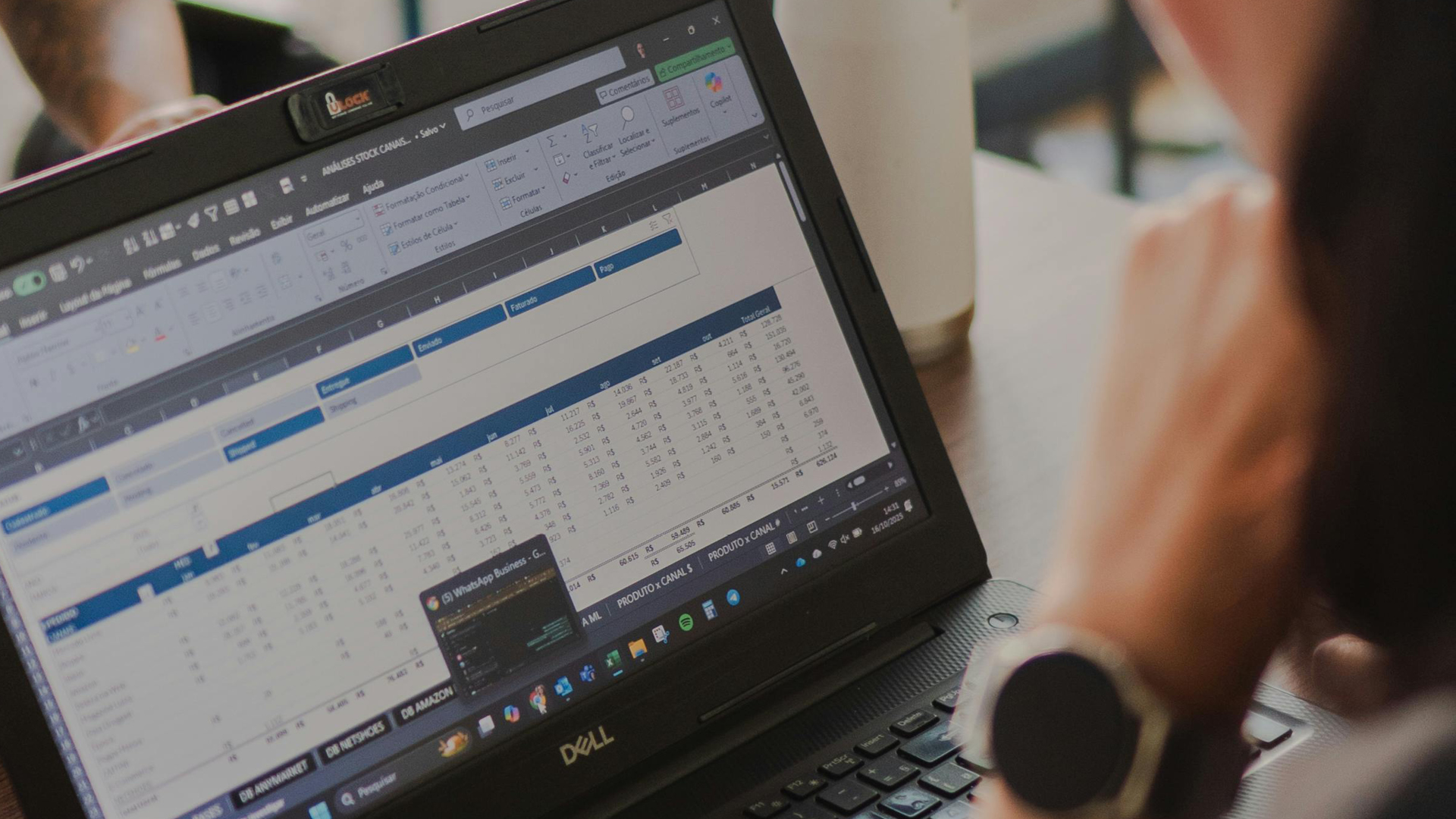
For most self-storage teams, it is still the center of the workflow. Deals are underwritten in it, comp sets are built in it, and pricing strategies are tracked in it. It is where decisions actually get made.
The real issue is what happens before the data ever makes it into the model.
In most cases, the process still looks the same. You pull data from a platform, export it, paste it into Excel, and start building. From there, everything is based on that moment in time.
The problem is that the market does not stand still. And once your data is exported, your model slowly starts to drift away from reality.
At first, the process feels reliable.
You gather your comps, build your assumptions, and share the file. Everything checks out. But pricing shifts faster than most people expect, especially at the local level where competition, promotions, and supply changes can move week to week.
That means even a well-built model can quickly become misaligned with the market. The formulas are still correct, but the inputs are no longer current.
This creates a subtle but meaningful risk. Decisions are being made based on what the market looked like, not what it looks like now.
Most teams compensate for this in familiar ways. They manually refresh data, rebuild comp sets, or add extra cushion to their assumptions. While that keeps things moving, it also introduces friction and slows down the overall process.
Now consider a different approach.
Instead of pulling data once, your Excel model stays connected to the source. The structure of your model does not change, but the data within it updates as the market moves.
You are no longer rebuilding your analysis every time something changes. You are working inside a model that stays aligned with current conditions.
This shift seems small, but it fundamentally changes how decisions are made.
One of the biggest advantages of a connected model is the ability to work with more complete context.
Rather than relying on a single snapshot, you can evaluate pricing across multiple time horizons. Short-term performance still matters, but it becomes part of a broader picture.
Access to T-12 and T-25 historical averages helps anchor your assumptions in how a market has actually behaved, smoothing out short-term volatility and giving you a more stable baseline.
At the same time, all-time historical pricing at the facility level provides deeper insight into how individual assets perform over time. You can see how pricing responds to different market conditions and where a facility sits relative to its own history.
This level of context leads to decisions that are not only more informed, but more resilient.
Another common gap in traditional models is how pricing is represented.
Many teams rely on a single version of rent, even though that does not reflect how the market operates. There is often a meaningful difference between what is advertised online and what is offered in-store.
When you can pull web and in-store rates at the same time, side by side, it becomes easier to understand how competitors are truly positioning themselves. You gain visibility into pricing strategy, not just pricing levels.
That added clarity can reveal opportunities and risks that would otherwise go unnoticed.
Speed is often viewed as a matter of efficiency. In practice, it plays a much larger role.
In self-storage, opportunities move quickly. A deal becomes available, a competitor adjusts pricing, or a submarket begins to shift. The teams that recognize and respond to these changes first are often the ones that come out ahead.
What slows most teams down is not a lack of effort, but the process itself.
Updating a model typically requires going back to the data source, exporting new information, cleaning it, and reworking parts of the spreadsheet. Even when done well, this process takes time. Because of that, it does not happen as frequently as it should.
As a result, decisions are often made using information that is slightly outdated.
When your Excel model is connected directly to live data, that friction is removed. Updating your assumptions becomes a simple refresh rather than a rebuild.
This has a direct impact on how quickly you can operate. You can evaluate opportunities sooner, respond to changes in the market with greater confidence, and adjust your strategy without delay.
Just as important, it allows for more iteration. Instead of relying on a single version of a model, you can test multiple scenarios, compare different comp sets, and refine your assumptions using data that stays current.
This is where the real advantage emerges. It is not just about moving faster, but about making better decisions within the same amount of time.
Traditionally, there has been a tradeoff between speed and accuracy. Moving quickly often meant working with less complete information. With a connected model, that tradeoff disappears. You can maintain both speed and precision at the same time.
In a market where conditions are constantly shifting, that combination becomes a meaningful edge.
Over time, this changes how models are used.
Instead of being treated as static files that require constant updating, they become living tools that stay aligned with the market. The structure remains consistent, but the data evolves alongside real-world conditions.
This reduces the need for repeated manual work and increases confidence in the outputs. The focus shifts away from managing data and toward making decisions.
The Radius+ Excel plug-in was built to support this shift.
It connects your Excel models directly to Radius+ pricing data, allowing you to pull what you need without exporting or reformatting. Whether you are analyzing a market, validating assumptions, or tracking competitor pricing, the data flows directly into your existing workflow.
That includes:
T-12 and T-25 historical averages
All-time historical pricing at the facility level
Web and in-store rates retrieved simultaneously
Real-time and monthly pricing data within any market
The goal is not to change how you work, but to remove the friction around getting the data you rely on.
Excel will continue to be where most self-storage decisions are made.
What is changing is how those decisions are supported.
When your model stays connected to current data, you are not just working more efficiently. You are working with a clearer and more accurate view of the market at all times.
And in an environment where small differences in assumptions can have a significant impact, that clarity matters.